Why Metadata and Rights Management Matter in Music Distribution
- admin
- March 25, 2026
- Music Business, Music Distribution
- catalogue management, digital music distribution, independent artists, ISRC, master rights, music business, music industry, music metadata, music rights management, music royalties, record label services, rights management, sound recording rights, streaming revenue
- 0 Comments
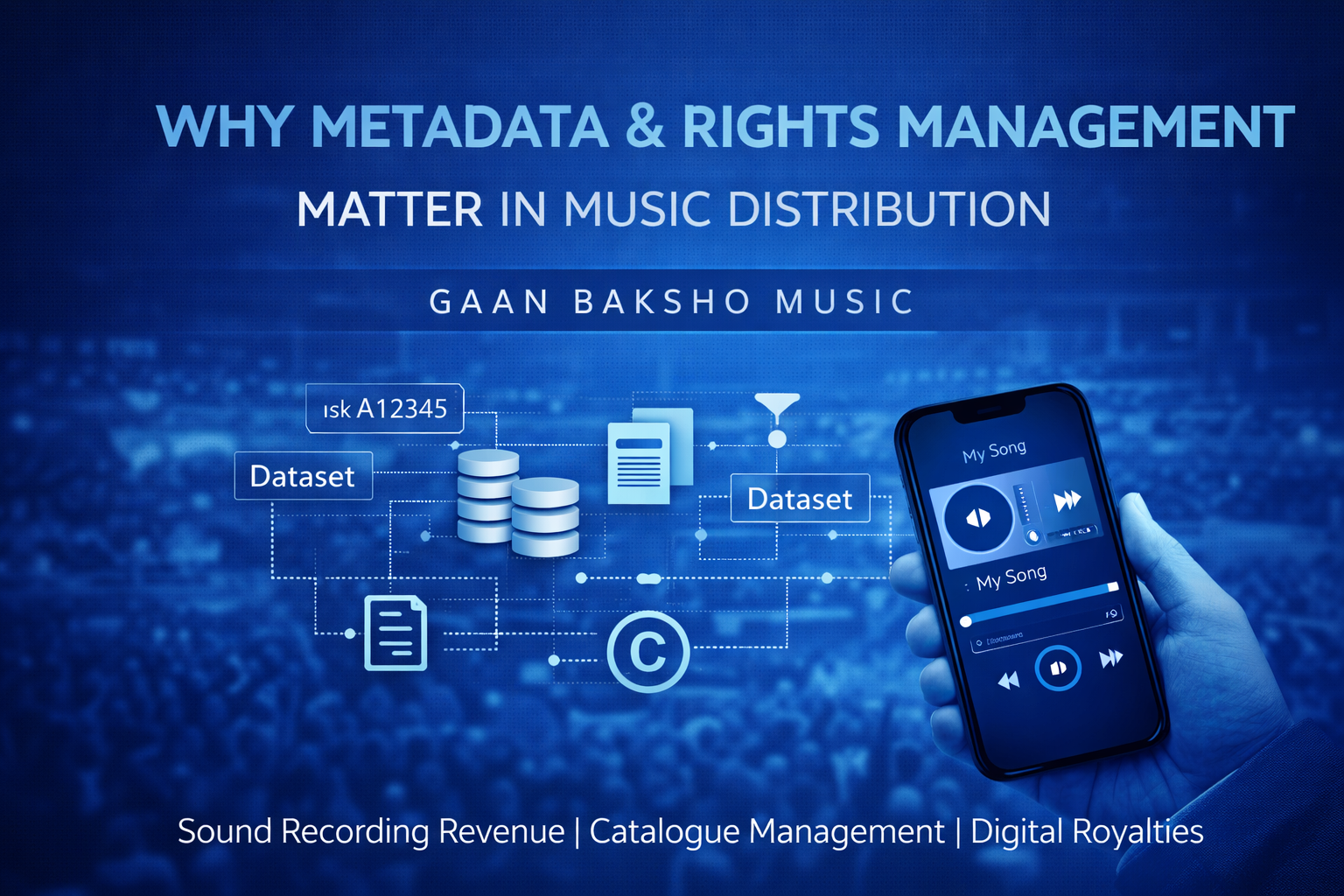
Why Metadata and Rights Management Are Central to Music Revenue
The modern music industry is no longer driven solely by distribution or streaming volume. It is driven by data. As music is consumed across streaming platforms, social media, user-generated content platforms and digital ecosystems, revenue from sound recordings depends heavily on metadata accuracy and rights management systems.
For labels, distributors and independent artists, this represents a critical operational shift. Revenue is not just generated through plays. It is secured through the structure and integrity of the data attached to each release.
The Role of Metadata in Digital Music Distribution
Metadata defines how a sound recording is identified, delivered and monetised across digital service providers. This includes ISRC codes, track titles, artist names, release information, label ownership and distribution data.
Every stream, download or use of a recording relies on this information to ensure correct attribution and payment. Digital service providers use metadata to allocate revenue, report usage and distribute earnings to the appropriate rightsholders.
Where metadata is inconsistent or incomplete, revenue from sound recordings may be misallocated, delayed or remain unaccounted for within platform reporting systems.
Sound Recording Rights and Revenue Flow
Unlike publishing, sound recording income is generated through master rights. This includes streaming revenue, digital downloads, neighbouring rights and platform-based monetisation across services such as Spotify, Apple Music, YouTube and emerging short-form platforms.
Effective rights management ensures that:
- Ownership of master recordings is clearly defined
- Releases are properly delivered to all relevant platforms
- Revenue is tracked across multiple territories and services
- Usage data is accurately reported and reconciled
Without structured rights management, artists and labels may lose visibility over how their recordings are performing and where revenue is being generated.
The Impact of Poor Metadata on Revenue
A significant portion of digital music revenue is impacted by metadata issues. Common problems include incorrect artist naming, missing ISRC codes, duplicate releases and inconsistencies across platforms.
These issues can result in:
- Lost or unreported streams
- Incorrect royalty allocation
- Fragmented catalogue presence across platforms
- Reduced discoverability within algorithms
In a highly competitive streaming environment, metadata directly influences both revenue and visibility.
Metadata as a Commercial Asset
In today’s music business, metadata is not a backend requirement. It is a commercial asset that directly impacts performance, monetisation and catalogue value.
High-quality metadata improves:
- Algorithmic discovery and playlist positioning
- Accuracy of royalty reporting
- Efficiency of global distribution
- Long-term value of master recordings
As catalogue-based revenue becomes more important, the ability to maintain clean and consistent metadata across all platforms is essential.
Rights Management in a Global Distribution Environment
Music distribution is inherently global, but revenue collection remains platform and territory dependent. Each digital service provider operates within its own reporting and payment framework, requiring consistent data alignment across systems.
Rights management ensures that recordings are properly structured within this environment, allowing revenue to flow accurately from platform to rightsholder.
For independent artists and labels, this means moving beyond simple distribution and adopting a more structured approach to catalogue management and rights control.
How Gaan Baksho Music (GBM) Supports Artists and Labels
At Gaan Baksho Music, we focus on sound recording rights management, digital distribution and revenue optimisation for artists and labels operating in a global market.
Our approach includes:
- Accurate metadata structuring and verification
- Distribution across major digital service providers
- Catalogue management and release optimisation
- Revenue tracking and reporting across platforms
- Ongoing support for rights clarity and performance growth
We ensure that every release is properly structured to maximise visibility, monetisation and long-term value.
Work With Gaan Baksho Music
As the music industry becomes increasingly data-driven, success depends on how well your recordings are managed, not just how widely they are distributed.
If you are looking to improve your digital distribution, strengthen your metadata and ensure your sound recordings generate their full revenue potential, Gaan Baksho Music can support you.
Contact us to build a structured, scalable and revenue-focused approach to your music catalogue.
Related Posts

- admin
- September 25, 2025
Indie Distributor vs. Rights Management in Australia: What’s the Real Difference?
Distributor vs Rights Management in Australia: Why You Need Both — and How Gaan Baksho Music ..

- admin
- September 10, 2025
From Local to Global: Why Independent Artists Are Winning in 2025
🌍 The Rise of Independent Digital Distribution: The 2025 Global Music Landscape Explore how ..